
New Paper: Can Generative AI Be Used to Design Emotional Stimuli?

Autor: shahabshahadmin

  • New Paper: Can Generative AI Be Used to Design Emotional Stimuli?

    New Paper: Can Generative AI Be Used to Design Emotional Stimuli?

    We are happy to share our new open-access paper, “Emotional and attentional biases of AI-generated visual stimuli: An eye-tracking study.” We asked whether a diffusion-based generative AI model can be used to systematically manipulate the emotional content of images, and how people respond to those images in terms of self-reported emotion, visual attention, and pupil dilation.

    Published in: Computers in Human Behavior Reports
    Authors: Shahab Fatemi, Vahid Shalchyan
    Read the paper (open access): https://doi.org/10.1016/j.chbr.2026.101394

    What we did

    • Took 24 neutral object images (e.g., a shirt, a cup, a lamp) and used the MagicMix diffusion model to blend each with the prompt “happy face”, creating 24 emotionally biased counterparts.
    • Matched the two sets for color, brightness, contrast, and visual complexity.
    • Recorded gaze and pupil size from 44 participants with an EyeLink 1000 Plus eye tracker (1000 Hz) during free viewing.
    • Collected valence and arousal ratings with the Self-Assessment Manikin (SAM).

    Key findings

    • Self-reported emotion: Emotional images were rated significantly higher in both valence and arousal than their neutral counterparts.
    • Attention: Participants looked longer at the emotional images (median dwell time of 4.68 s vs. 3.77 s).
    • Pupil dilation: Emotional images produced larger baseline-corrected pupil dilation, significant in the 1.0–2.5 s window and in the trial-level model for 2.5–6.0 s.

    Important caveats

    The emotional condition is confounded with the presence of smiling faces and anthropomorphic features. The effects should therefore be read as specific to this type of AI-generated manipulation, not to AI-generated emotional content in general. The study also covered only positive emotion, and the AI model served solely as a stimulus-generation tool, not as an interactive agent that influences people.

    Why it matters

    Generative AI looks like a promising, flexible tool for designing controlled stimuli in neuroscience, human–computer interaction, and experimental design. Future work should add faceless emotional controls, negative-valence stimuli, and complementary measures such as EEG or skin conductance.

    Cite this paper

    Fatemi, S. S., & Shalchyan, V. (2026). Emotional and attentional biases of AI-generated visual stimuli: An eye-tracking study. Computers in Human Behavior Reports, 24, 101394. https://doi.org/10.1016/j.chbr.2026.101394
  • Recent Apps: LifeOS and the Leitner Web App

    Two new tools are now available: LifeOS, a personal life operating system for planning and productivity, and the Leitner Web App, a structured-repetition tool for memorizing large amounts of material. Here is what each one does.

    1. LifeOS: Your Personal Life Operating System

    Try it: study.movcas.ir

    LifeOS (short for Life Operating System) is a WordPress-based productivity and life-management system. Instead of switching between separate apps for planning, notes, tasks, and focus sessions, you manage them all in one workspace. It combines ideas from planners, note-taking apps, task managers, and productivity tools.

    Features

    • 📝 Notes and personal information management
    • ✅ Task and activity management
    • 📅 Planning and organization
    • 🎯 Goals and personal objectives
    • 🍅 Pomodoro timer for focused work
    • ⏱️ Time and productivity tools
    • 📊 Personal progress and activity tracking
    • 🗂️ Organized information and life management
    • ⚙️ Multiple options and customizable features

    LifeOS doesn’t force you into one productivity method. It gives you a set of tools to build the system that works for your own life, and the collection keeps growing.

    💡 Life Advice

    LifeOS also has a dedicated section for life advice and personal guidance, with ideas and practical suggestions about habits, decisions, personal development, and everyday challenges. It’s a place to reflect, learn, and improve, not just plan.


    2. Leitner Web App: Memorize More with Structured Repetition

    Try it: study.movcas.ir

    Repetition is the key to memorizing, and memorizing is a big part of learning. But if you have too much material to memorize, you need a structured way to repeat it. The Leitner method provides that, and this app puts it into practice with customized features.

    How the Leitner method works

    It is a spaced-repetition technique: items you know well are reviewed less often, and items you struggle with come back more often. This makes your study time more efficient when you have a lot of material.

    How to get access

    • Register an account: Registration is currently handled by contacting me directly.
    • Source code or plugin: If you’d like the source code or the plugin version, you can request it through the same contact.

    Get in touch

    Questions, feedback, feature ideas, or access requests for either app: send me a message at contact page.


  • Editorial Note: Special Issue on “Applications of Deep Learning in Electrical and Electronic Engineering”

    I’m happy to share the editorial note for the IJEEE special issue “Applications of Deep Learning in Electrical and Electronic Engineering.” I co-wrote it as a member of the journal’s managing editorial team, together with Ardalan Faezmehr and Prof. Mohammad Reza Daliri, the journal’s Editor-in-Chief. It introduces the special issue and gives readers a guide to the papers inside.

    Published in: Iranian Journal of Electrical and Electronic Engineering (IJEEE), ijeee.iust.ac.ir
    Authors: Ardalan Faezmehr, Seyed Shahab Fatemi, Mohammad Reza Daliri
    Read the editorial: https://doi.org/10.22068/IJEEE.20.4.3597

    What the editorial covers

    • An overview of how deep learning is used across five areas of electrical and electronic engineering: biomedical, communication, power, control, and electronics.
    • The challenges that come with it, such as the need for large training datasets and the complexity of designing network architectures.
    • Short summaries of the 15 papers published in the special issue.

    Highlights from the special issue

    • Biomedical and health: heart sound analysis (phonocardiograms), coronary heart disease prediction with a robust neural network classifier, and tuberculosis detection from chest X-rays.
    • Communication and signal processing: machine learning-driven adaptive modulation for visible light communication in medical sensor networks, PAPR reduction in 5G FBMC systems, GPS spoofing detection, and radar-based human activity classification.
    • Robotics and vision: abnormal activity detection with YOLOv9, a virtual assistant robot for exercise supervision, robotic object handling with Faster R-CNN, grasp area detection for 3D objects, and 3D shape matching.
    • Energy and applications: an ANN-based photovoltaic emulator, driver facial emotion recognition for in-vehicle safety, and the first abstractive text summarization corpus for Sorani Kurdish.

    Cite this editorial

    Faezmehr, A., Fatemi, S. S., & Daliri, M. R. (2024). Editorial note to the special issue: “Applications of deep learning in electrical and electronic engineering.” Iranian Journal of Electrical and Electronic Engineering, 20(Special Issue on ADLEEE), 1-7. https://doi.org/10.22068/IJEEE.20.4.3597

  • New Book: Human and AI: Collaborative Medicine in the Age of Technology

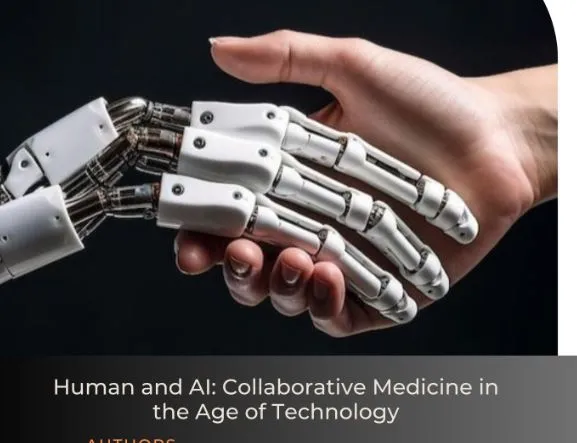
    New Book: Human and AI: Collaborative Medicine in the Age of Technology

    I’m glad to share that I contributed to Human and AI: Collaborative Medicine in the Age of Technology, a peer-reviewed book written by a large team of clinicians, researchers, and engineers from universities across Iran and abroad. The book looks at how AI and human experts can work together in healthcare, with AI as a complement to clinicians rather than a replacement.

    Published by: Kindle / PreferPub, April 2024
    Authors: Mehrdad Farrokhi, Fatemeh Taheri, Masoud Farrokhi, and 40+ co-authors, including Shahab Fatemi (Iran University of Science and Technology)
    ISBN-13: 979-8322534396
    Language: English
    Book link: Amazon Books
    Reference page: 10.5281/zenodo.11050414

    What the book covers

    The book has 11 chapters on AI-human collaboration in managing:

    • Renal diseases
    • Neurological diseases
    • Gastrointestinal diseases
    • Cardiac diseases
    • Dermatological diseases
    • Ophthalmological diseases
    • Oral diseases
    • ENT diseases
    • Orthopedic diseases
    • Psychiatric disorders
    • Other diseases, including radiology and cancer

    Recurring themes

    • Diagnosis: machine learning and deep learning for reading medical images, ECGs, and clinical data.
    • Treatment and prognosis: decision support and personalized treatment planning.
    • Access to care: telemedicine and remote monitoring.
    • Challenges: data quality, algorithmic bias, privacy, transparency, and the need for training and regulation.
    • Human-in-the-loop care: AI supports clinicians, and the final decisions stay with them.

    Why it matters

    With a global shortage of healthcare workers, AI-human collaboration could ease workloads and improve care quality, provided ethical and practical challenges are addressed.

    Cite this book

    Farrokhi, M., Taheri, F., Farrokhi, M., Emtiazi, N., Talebi, M., Akbari, A., Esfahani, A., Fatemi, S., et al. (2024). Human and AI: Collaborative medicine in the age of technology. Kindle/PreferPub. ISBN 979-8322534396.